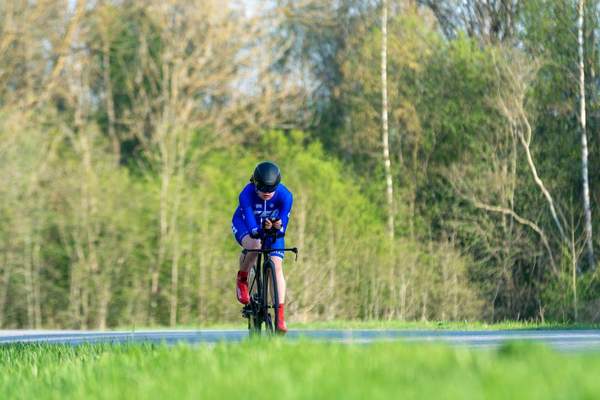

A road time trial looks simple from the roadside: one rider, one course and a clock. Yet the fastest effort is rarely the one that feels hardest in the opening minutes. Effective cycling time trial training teaches you to distribute effort, produce steady power and stay comfortable in a position that cuts through the wind. Those skills make time trials a useful discipline even for road racers who normally train for bunch events.
Train for the demands of riding alone
In a road race, drafting and attacks constantly change the workload. In a time trial, there is nowhere to hide and fewer opportunities to recover. You must settle into a sustainable effort while handling turns, gradients and changing wind. General endurance rides create the aerobic base, but race-specific practice develops the concentration and pacing judgment needed to turn fitness into speed.
Develop a TT pacing strategy before chasing more watts
Start smoothly and keep something in reserve
Accelerate decisively from the start, then settle into your planned output rather than sprinting until your legs burn. A common beginner mistake is spending too much energy in the first few minutes and struggling through the second half. Aim for a controlled opening, stable middle and a stronger finish if you still have capacity.
If you use a power meter, study lap-average power instead of reacting to every changing second-by-second reading. Without one, use breathing and perceived exertion: the effort should feel demanding but repeatable, not like a sprint. Heart rate can support the assessment, although it responds more slowly to changes in effort.
Let terrain guide small adjustments
Perfectly even power is not always the fastest approach on a rolling course. A modest increase on a climb and restraint on a fast descent can be sensible, but repeated surges usually cost more than they gain. Practise the course, note exposed sections and corners, and avoid riding into unsafe speeds just to protect an average.
Build sustainable power with threshold intervals
Cycling threshold training develops the ability to sustain a hard aerobic effort without a dramatic fade. Functional threshold power, or FTP, is a useful estimate for setting sessions, not a guarantee of what you can hold in every race. Conditions, fatigue, position and event length all affect your actual pacing target.
Begin with two 10-minute efforts near your estimated threshold, separated by five minutes of easy spinning. As your control improves, progress toward two 15-minute efforts and eventually two 20-minute efforts. Keep the power smooth rather than rescuing a session with a frantic final minute. Riders without a meter can use a hard, controlled effort that permits only short phrases of speech.
Not every workout needs to be maximal. A steady endurance ride builds capacity between intense sessions, while shorter efforts above threshold can support your ability to manage rises and accelerations. Leave easy days genuinely easy so the important sessions remain productive. For help setting intensity, a guide to road cycling training zones is a natural next read.
Make aerodynamic position part of the workout
Aero cycling training means learning to produce useful power while presenting less resistance to the air. A position that looks impressively low but restricts breathing, reduces power or makes steering uncertain is not automatically faster. Build comfort progressively on a suitable bike, and consider a professional fit if you develop pain or struggle to hold the position.
During an interval, notice whether your shoulders rise, your elbows drift outward or you repeatedly sit up as fatigue builds. Start with five- to eight-minute blocks in your intended race position and extend them as comfort improves. Practise looking ahead, braking and cornering safely; never stay tucked when control or visibility is compromised. A separate article on cycling bike fit basics can help explain the trade-offs.
A practical time trial training plan for a busy week
For a rider already comfortable with regular cycling, this sample week provides structure without turning every ride into a test. Adjust duration and recovery to your current training load.
Monday: Rest or take an easy recovery spin. Arrive at the next workout feeling fresher, not merely determined.
Tuesday: Warm up thoroughly, ride two 15-minute threshold intervals with five minutes easy between, then cool down. Concentrate on controlled pacing.
Wednesday: Ride 45 to 75 minutes at conversational endurance intensity. Keep it relaxed rather than adding unplanned sprints.
Thursday: Complete three eight-minute efforts at planned race intensity in your aerodynamic position, taking easy recovery between efforts. This session links power to posture.
Friday: Rest, or take a short easy ride if that helps your legs feel better.
Saturday: Ride a longer, mostly easy endurance session suited to your experience. Avoid making it so demanding that Sunday’s work suffers.
Sunday: Rehearse a 15- to 25-minute uninterrupted solo effort on a safe route or indoor trainer. Record pacing, position changes and how you felt afterward.
Keep demanding sessions separated by recovery where possible. Every few weeks, reduce training stress and review progress before increasing interval duration. For more ideas between outdoor sessions, explore indoor cycling interval sessions.
Rehearse the race, not just the numbers
Imagine preparing for a 10-mile event with a headwind on the outward leg and a tailwind home. On a practice ride, avoid panicking because the outward speed looks slow. Watch sustainable effort instead, keep the bike controlled and resist the temptation to exhaust yourself against the wind. The return leg may feel easier, but the clock rewards your complete ride, not one impressive split.
Get the start and final minutes right
On race day, check the course rules, bike and equipment, then warm up with enough time to reach the start calmly. Take care around traffic, junctions and other riders. After the start, build to target intensity smoothly, maintain attention through the middle and increase your effort only when you are confident the finish is close. A slightly slower first half followed by a solid finish often beats an early blow-up.
Frequently asked questions
One race-specific session each week is a reasonable starting point alongside other training. Add intensity cautiously and reduce it if recovery, sleep or performance deteriorates.
Yes. A well-maintained road bike is enough to develop pacing and endurance. Consistent position, safe handling and fitness matter more initially than specialist equipment.
No. FTP is an estimate used for training. Your sustainable race power varies with event duration, course, weather and how well you can maintain your position.
Reduce overall workload, keep a little short, familiar intensity and prioritise rest. Avoid introducing difficult new workouts or major equipment changes.
Turn steady effort into faster riding
Good time trials are built through repeated, controlled practice. Develop threshold fitness, rehearse your TT pacing strategy and make aerodynamic position sustainable rather than extreme. The goal is not to win the first minute; it is to ride the whole course as efficiently as your fitness allows.