
The clearest way to understand judo vs BJJ is to watch what happens after two athletes establish their grips. In judo, the contest often revolves around creating an opening for a decisive throw. In Brazilian jiu-jitsu (BJJ), that same exchange may be the beginning of a longer struggle for control on the ground. Both arts teach leverage, balance and submissions, but their competition rules reward different decisions.
That distinction matters more than the familiar claim that judo is “standing” and BJJ is “ground fighting.” Each discipline includes both phases. The real difference is how much time, attention and scoring value each phase receives.
Judo vs Brazilian Jiu-Jitsu at a Glance
Judo developed in Japan under Jigoro Kano and became an Olympic sport. Brazilian jiu-jitsu developed from Japanese grappling traditions, especially judo, into a discipline with a strong emphasis on positional groundwork. Their shared history helps explain familiar chokes, arm locks, grips and escapes.
In competitive judo, a clean, controlled throw can end a match immediately. In BJJ, a takedown normally earns points and the action continues, giving both athletes opportunities to pass guard, sweep, secure dominant positions or submit.
Throws and Takedowns: Where Each Art Starts
Judo rewards the quality of the landing
Judoka spend considerable time developing off-balancing, footwork and timing. Techniques such as the foot sweep, hip throw and shoulder throw use an opponent’s movement rather than simply pulling them down. The goal is not merely to reach the mat; it is to execute a skilled, controlled throw that meets scoring criteria.
Under International Judo Federation (IJF) contest rules, direct grabbing of an opponent’s legs with the hands is generally prohibited in standing exchanges. The restriction shapes the upright posture, gripping battles and throwing techniques seen in elite matches.
BJJ values the position after the takedown
BJJ competitors use trips, wrestling-style takedowns and judo throws, depending on the ruleset. They may also pull guard, deliberately bringing the contest to the ground while retaining a defensive or attacking position. What happens next often matters more than how dramatic the descent looked.
Groundwork: Pins, Guard and Submissions
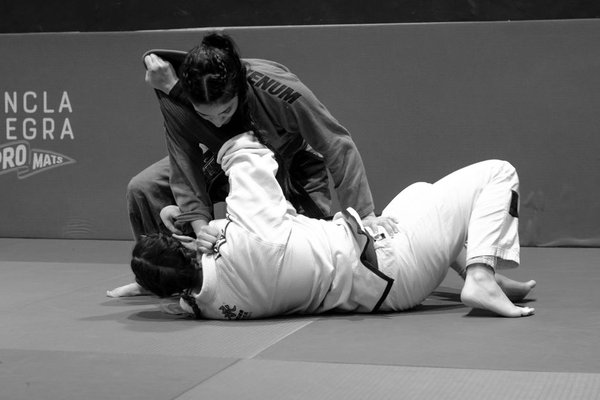
Both grappling styles practise chokes, joint locks, escapes and positional control. Judo calls groundwork ne-waza, and it can produce a quick victory through a submission or a recognised hold-down. However, referees may restart athletes standing when groundwork stalls or no meaningful progress is occurring.
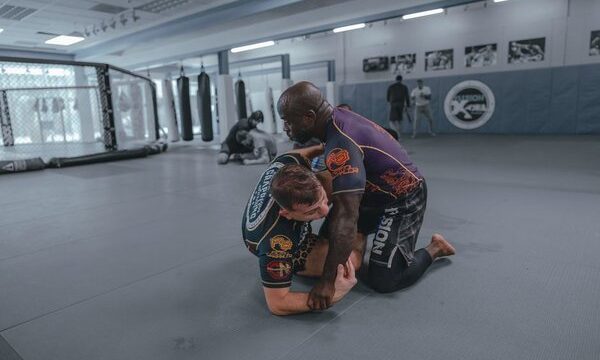
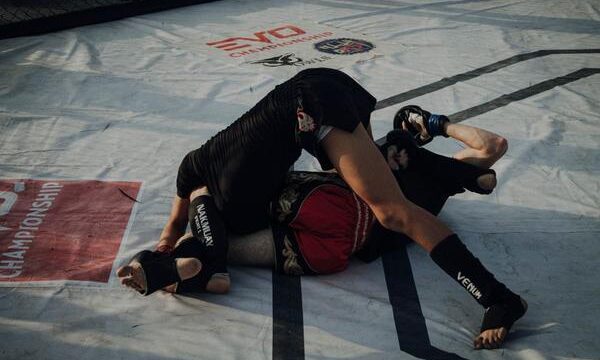
BJJ generally allows extended groundwork. A player underneath can use closed guard, half guard or open guard to prevent a pass, set up a sweep or attack a submission. The athlete on top tries to clear the legs and establish secure control. This makes guard retention, passing and escapes major areas of technical study.
Judo competition permits a narrower range of joint-lock attacks, mainly those directed at the elbow. BJJ permits a broader selection, although legal submissions vary by age, belt, uniform and tournament rules. Neither art should be judged solely by its most permissive competition division.
How Scoring Changes the Match
Judo: ippon, waza-ari and yuko
Under the current IJF scoring framework, ippon wins immediately. It can come from a qualifying throw, a submission or a 20-second hold-down. Two waza-ari also combine into a match-ending ippon. Yuko, reintroduced for the current rules cycle, rewards lesser scoring actions. On the ground, a recognised hold lasting 5–9 seconds earns yuko; 10–19 seconds earns waza-ari.
That means older articles claiming modern judo has only ippon and waza-ari are out of date. Penalties and golden-score overtime also influence tactics, so the official rulebook for an event remains important.
BJJ: positional points and submission finishes
In common International Brazilian Jiu-Jitsu Federation (IBJJF) scoring, a takedown or sweep is worth two points; a guard pass earns three; and mount or back control earns four. Knee-on-belly control can earn two. Position scores normally require stabilisation, and a legal submission ends the contest regardless of the points.
Imagine one athlete executing a beautiful throw but landing inside the opponent’s guard. That might be a decisive result in judo if the throw meets ippon criteria. In BJJ, the top athlete usually still has to deal with guard before earning passing or dominant-position points.
Match Pace, Uniforms and Training Habits
Judo contests often feature explosive bursts, rapid grip exchanges and frequent transitions between standing and groundwork. BJJ matches may include slower positional battles, with athletes adjusting grips and pressure before attempting a sweep or submission. Neither pace is inherently easier; both demand conditioning and precise decisions.
Traditional judo and gi BJJ use sturdy jackets that create gripping opportunities. BJJ also has no-gi competition, where athletes grapple without jacket grips and rely more on body control, wrist ties and underhooks. The uniform changes how familiar techniques are applied.
Training culture varies widely. A judo club may devote substantial time to breakfalls, throws and controlled randori, while a BJJ academy may emphasise positional sparring and submission rounds. Visit an actual class rather than assuming every school follows the same formula.
Which Is More Useful for Beginners?
Choose judo if you are excited by balance, standing exchanges, breakfalls and learning to throw safely on proper mats. Choose BJJ if you want to spend more time understanding guard, escapes and sustained ground control. Either can build confidence and fitness with competent coaching.
For practical self-protection, both offer useful skills but neither guarantees safety. Avoidance, awareness and getting away remain more important than winning a grappling exchange, especially around hard surfaces or multiple people.
A useful trial is to attend one introductory class in each art. Notice whether the coach teaches safe falling, pairs newcomers thoughtfully and explains when to tap. You can also explore judo throws for beginners, BJJ positions explained and submission grappling rules as follow-up topics before committing.
Frequently Asked Questions
Judo usually gives students more concentrated practice in jacket-based throws and off-balancing. Some BJJ gyms have excellent wrestling and takedown instruction, however, so the coaching and curriculum matter as much as the label.
Yes, provided they meet the event’s eligibility and registration rules. Their grip fighting and throws can transfer well, but they must adapt to guard pulling, longer ground exchanges and BJJ-specific scoring.
Absolutely. Throws and takedowns are part of BJJ, although they normally lead into positional groundwork rather than automatically deciding the contest. Their use depends on training priorities and tournament rules.
Yes. The arts complement each other, especially for practitioners seeking both standing entries and detailed ground control. Beginners should build sound fundamentals in each and manage their overall training load.
Conclusion
The central judo BJJ differences lie in what the rules reward: judo places exceptional value on controlled throws and swift finishes, while Brazilian jiu-jitsu encourages extended positional problem-solving. Rather than asking which art is universally better, choose the training experience that matches your goals—and remember that a good coach makes an enormous difference.