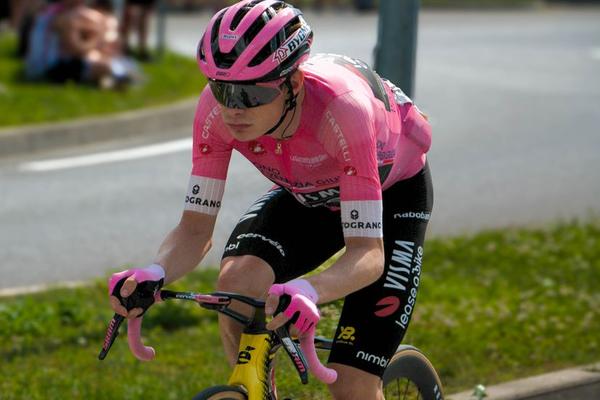

Four jerseys stand out in the Tour de France peloton: yellow, green, white with red polka dots, and plain white. They are not team uniforms or awards for different kinds of stage wins. Each identifies the leader of a separate competition within the same race. Knowing what they mean makes even a quiet stage more interesting: riders far from the overall lead can still have something major to fight for.
What Do the Four Tour de France Jerseys Mean?
Yellow belongs to the overall leader on accumulated time. Green identifies the points-classification leader, often a consistent sprinter. The polka dot jersey marks the mountains leader, while white recognises the best-placed eligible young rider on overall time. These standings change as the Tour progresses, so a jersey can switch riders after any stage.
Yellow Jersey: The Overall Race Leader
The yellow jersey meaning is straightforward: its wearer has the lowest total time in the general classification, or GC. Officials add recorded stage times and apply relevant time bonuses and penalties. The rider with the best cumulative result leads the Tour, even when someone else has won more stages.
Imagine a rider finishes five minutes ahead of a rival on a mountain stage, then loses one minute to that rival in a time trial. Across those stages, the first rider is still four minutes ahead, assuming no other adjustments. A stage victory is memorable, but yellow rewards consistent performance throughout the Tour.
Mountains, crosswinds and time trials can reshape the GC. Contenders must avoid losing significant time, while team-mates help protect them. Tour de France stages explained is a useful companion topic for understanding the different challenges along the route.
After the final stage, the rider with the lowest cumulative time wins the Tour de France. Yellow is both a daily leadership marker and the event’s most prestigious overall prize.
Green Jersey: The Points Classification
The green jersey Tour de France competition rewards riders who collect the most points, not the least elapsed time. Points are available at stage finishes and designated intermediate sprints on road stages. The number offered depends on the stage type and that edition’s rules; flat finishes generally favour sprinters.
Winning one sprint stage does not guarantee green. A rival who repeatedly finishes near the front and collects intermediate sprint points may build a bigger total. Conversely, a rider can finish far behind the yellow-jersey contenders in the mountains and still hold the points lead.
Green is commonly called the sprinters’ jersey, but versatile riders can succeed through consistency. To win it at the end, a rider must remain in the race and meet finishing requirements. Surviving difficult mountain stages matters even to specialists targeting flat finishes.
Watch an intermediate sprint on a quiet road stage. The sudden acceleration well before the finish can decide important green-jersey points, regardless of who eventually wins the stage.
Polka Dot Jersey: King of the Mountains
The white jersey covered in red dots identifies the mountains classification leader, traditionally called King of the Mountains. Riders earn points by crossing the summits of categorised climbs in high positions. Tougher climbs generally offer more points, with allocations determined by the race regulations.
Climbs run from category four through three, two and one, with hors catégorie (HC) reserved for especially demanding ascents. Some uphill finishes can also carry valuable points. A rider may attack early to take points on smaller climbs, or target a major summit later.
The polka dot jersey does not automatically go to the fastest climber, the winner of the hardest mountain stage or whoever gains the most elevation. It follows a points table. A breakaway specialist can collect summit points without threatening the overall lead.
The distinction becomes clearer when exploring how Grand Tour climbing categories work: terrain sets the opportunity, but placing at designated summits determines the score.
White Jersey: The Best Young Rider
The white jersey cycling fans see at the Tour uses the same cumulative-time standings as yellow, but only eligible younger riders count. Under the Tour’s rule, riders aged 25 or younger during the race year compete for this classification. The eligible rider highest in the GC leads white.
There is no separate youth points system. A young rider need not win a stage, sprint or mountain prize. Consistent performances across all terrain can put that cyclist at the top of the young-rider standings.
A rider can lead yellow and white at the same time, since an eligible cyclist might also be fastest overall. White can indicate emerging Grand Tour talent, but it does not necessarily identify the quickest young sprinter.
Can a Rider Lead More Than One Classification?
Yes. A rider could lead overall while also collecting the most mountain points or heading the young-rider competition. But a cyclist cannot wear two classification jerseys simultaneously. Jersey-wearing priority determines the colour they race in, and another suitably placed competitor can wear a lower-priority jersey without leading its standings.
Suppose the yellow-jersey leader also tops the mountains table. That rider races in yellow, while the next eligible competitor in the mountain standings may wear polka dots. Check the official rankings rather than assuming every jersey wearer is the classification leader.
The Tour also awards separate honours, including a team classification and an award for aggressive riding. Neither replaces the four famous individual leader jerseys.
How to Follow Jersey Battles During a Stage
Ask two questions: is someone gaining time, or gathering points? A breakaway on a hilly stage may scarcely affect yellow while shifting the polka dot standings. A bunch sprint can settle the day’s winner and add green points without changing GC gaps.
Individual time trials work differently: recorded times can reshape yellow and white, while conventional road-stage intermediate sprints do not feature. Cycling time trial basics is a useful related topic for understanding those gains and losses.
Compare the overall time gaps with the points and mountain standings after each stage. A single result rarely tells the entire story of the day’s racing.
Frequently Asked Questions
No. Yellow identifies the best cumulative time, not necessarily the latest stage winner. A rider can wear it for days without winning a stage.
No. It is based on points earned at eligible stage finishes and intermediate sprints. Consistent placings can beat a rider with more victories.
If the mountains leader wears a higher-priority jersey, another eligible rider may wear polka dots. The official ranking still identifies the leader.
That rider wears yellow, while another eligible competitor may wear white under jersey-priority rules. The young rider in yellow remains the actual leader of the youth competition.
Final Thoughts
The Tour de France is several races unfolding together. Yellow tracks accumulated time, green tracks finish and sprint points, polka dots track climbing points, and white tracks the best young rider on time. Once those differences click, mountain breakaways, intermediate sprints and quiet transition stages all have meaning beyond deciding who crosses the line first.