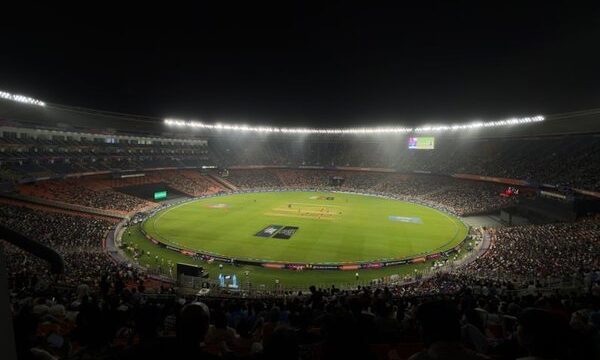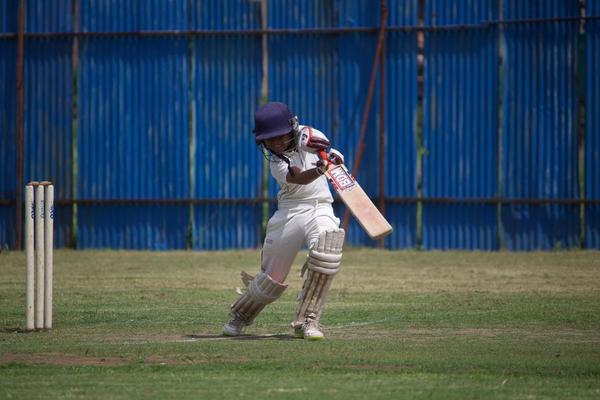

Rain stops play just as a team appears to have a chase under control. When the players return, the remaining overs have shrunk and the winning target has changed. To a casual viewer, the new number can seem arbitrary. The DLS method in cricket explains how it is reached: by comparing the scoring opportunities each side has had, not merely counting the overs lost.
The Duckworth Lewis Stern method applies to interrupted limited-overs cricket, including ODIs and T20s. Its key insight is simple: batting time and wickets in hand both affect how many runs a team can reasonably score.
Why a simple rain rule would be unfair
Suppose one side makes 250 from 50 overs. If rain cuts the chase to 40 overs, reducing the target to 201 by straightforward proportion might sound fair. Yet a team starting a 40-over chase with ten wickets intact is in a different position from a team that loses ten overs after batting cautiously for part of a planned 50-over innings.
Wickets matter just as much. A chasing team at 100/1 can take risks that a team at 100/7 cannot. That is why the DLS calculation examines the match situation rather than applying one fixed reduction for every lost over.
The resources behind the DLS calculation
Overs remaining
Each delivery represents a chance to score. In the published Standard Edition resource system, a full 50-over innings starts with 100% of the available run-scoring resources. Shorter innings start with less, but their resource percentages are not simply fractions of 50 overs.
Wickets in hand
With nine or ten wickets available, batters generally have more freedom to attack. As wickets fall, that freedom diminishes. DLS assigns remaining resources according to both overs left and wickets lost, so identical interruptions can produce different adjustments for teams in different positions.
The professional DLS model used at international level has additional adjustments reflecting scoring patterns. Consequently, a public resource table or basic online calculator may produce a slightly different result from the target announced by match officials.
How officials arrive at a revised target
First, the scorer establishes the run-scoring resources available to the side batting first. An interruption during that innings may reduce its resources, especially if the team began batting while expecting a longer innings.
Next, the resources available to the chasing side are assessed. For a stoppage during the chase, the model compares the resources remaining when play was suspended with those remaining when it restarts. That difference is the opportunity lost because of the interruption.
Finally, the two sides’ total resources are compared. Under the published Standard Edition, when the chasing team has fewer resources, the first-innings total is scaled down by their resource ratio. The resulting par total is rounded as prescribed, and one run is added to obtain the winning target. When the chasing side has more resources, a different adjustment adds runs for the extra opportunity.
Worked example: a target of 218 instead of 251
Imagine Team A scores 250 from its full 50 overs. Team B reaches 40/1 after 12 overs when rain intervenes. The delay costs ten overs, leaving a 40-over chase overall, with 28 overs still to be played after the restart.
Using illustrative published Standard Edition figures, Team B had 82.0% of its resources remaining when play stopped, with 38 overs left and one wicket lost. At the restart, with 28 overs left, it has 68.8% remaining. Therefore, the rain removed 13.2 percentage points of resources.
Team B’s total resources for its innings are now 86.8% rather than 100%. Multiplying Team A’s 250 by 0.868 gives 217. Team B needs 218 to win, while 217 would tie the match under this example’s calculation.
Simply multiplying 250 by 40/50 would miss the circumstances of the interruption. The official revised target cricket viewers see comes from the approved match software, so the example illustrates the Standard Edition logic rather than predicting every professional-edition result.
Rain during the first innings changes the calculation too
Consider a side that bats for 25 overs expecting a 50-over innings before rain reduces its allocation. It may have conserved wickets and scored at a measured pace, only to discover that much less batting time remains. The chasing team, meanwhile, may begin with full knowledge of its shorter innings.
DLS accounts for this imbalance. A revised target is therefore not necessarily a simple reduction of the first side’s total. For readers comparing formats, our guide to limited-overs cricket rules provides useful background on innings limits and interruptions.
Par score and revised target are not the same
A revised target is the minimum score needed to win a reduced match that continues. A DLS par score is the score that would make the chasing side level at a particular stopping point if the innings could not resume.
Par scores can change with deliveries and wickets. If the match ends prematurely after the required minimum overs, the chasing team’s score is compared with the par score at the interruption. Above par means a win; below par means a loss; equal to par means a tie, subject to the competition rules.
A live required run rate is something different again: it describes the scoring pace needed if play continues. Our guide to cricket scoring and run rates can help when several numbers appear on the broadcast at once.
Does every rain delay lead to a DLS result?
No. A match needs enough play for a result under its competition’s rules. In standard international matches, the chasing side generally needs an opportunity of at least 20 overs in an ODI or five in a T20I, with exceptions for a completed chase or other circumstances. Certain tournament stages have special minimums.
If sufficient play is impossible, the match can finish as no result. The match officials determine the revised overs and the official target; DLS does not independently decide how much time remains available.
Frequently asked questions
It stands for Duckworth–Lewis–Stern, named after Frank Duckworth, Tony Lewis and Steven Stern. It builds on the earlier Duckworth–Lewis method to account for changing scoring patterns.
No. The target depends on the resources available to both teams. In some circumstances, the adjusted target can be higher than expected or even higher than the original target.
Published Standard Edition tables can explain some examples, but the professional calculation uses approved software and updated parameters. Always treat the officials’ announced target as authoritative.
No. It is designed for limited-overs cricket. Tests follow different provisions for lost playing time, declarations, draws and results.
Conclusion
The best way to follow the DLS method in cricket is to watch two things: overs available and wickets remaining. Those resources explain why the number on the scoreboard can change in ways a simple run-rate calculation cannot. Distinguishing the revised target from the live par score makes a rain-affected finish much easier to understand.